


Introduction
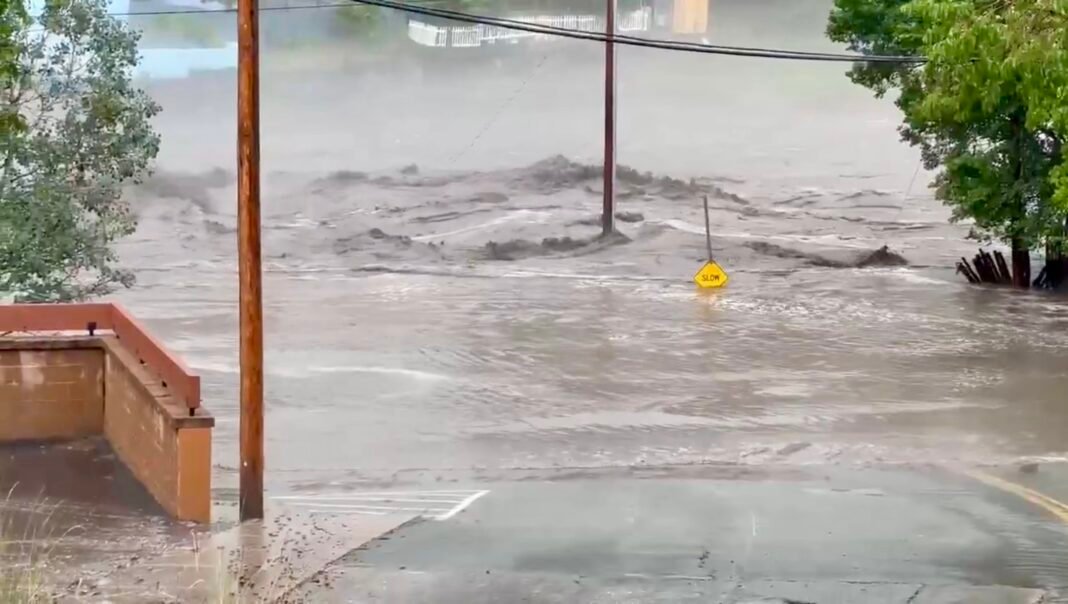
On July 8, 2025, the mountain village of Ruidoso, New Mexico, was blindsided by a catastrophic flash flood that ripped through homes, uprooted families, and claimed the lives of three people—including two children. What began as a summer afternoon turned into a nightmare fueled by a perfect storm of monsoonal downpours and wildfire-scarred terrain unable to absorb the sudden torrent.
The deluge turned the Rio Ruidoso into a raging wall of water, swelling to over 20 feet—a level never before recorded in the area. Entire neighborhoods were submerged or swept away. Emergency responders rushed to conduct over 60 swift water rescues. In the days that followed, a state of emergency was declared, families mourned loved ones, and New Mexico once again found itself grappling with the deadly aftermath of increasingly volatile weather patterns.
What Caused the Ruidoso Flooding?
A Lethal Mix of Rain and Burn Scars
The flash flood was triggered by intense monsoonal rains, with up to 3.5 inches falling in under 90 minutes in the upper watershed above Ruidoso. Under normal conditions, the forested slopes of the Sacramento Mountains might have soaked up some of this rainfall. But in this case, the land was left hydrophobic by two massive wildfires—the South Fork Fire and the Salt Fire—that burned over 24,000 acres just one year prior in 2024.
These burn scars stripped the soil of vegetation and created a hardened, water-repellent surface. Instead of absorbing rainfall, the ground acted like concrete, funneling stormwater at dangerous speeds downhill into canyons, neighborhoods, and the Rio Ruidoso itself.
Timeline of the Flood: What Happened on July 8
-
1:30 p.m.: Rain begins falling across the burn scar areas northwest of Ruidoso.
-
2:45 p.m.: Rain intensity increases rapidly, with up to 3.5 inches falling in steep terrain above the Rio Ruidoso.
-
3:00–4:00 p.m.: Rio Ruidoso surges from a modest stream to a churning flood that crests at 20.24 feet, smashing the previous record by over five feet.
-
4:15 p.m.: Flash flood warnings are escalated to Flash Flood Emergencies—the highest level issued by the NWS—urging residents to evacuate immediately.
-
5:00 p.m. onward: Emergency calls flood in as homes are swept away, vehicles overturned, and campers trapped.
The Victims: Lives Lost in the Torrent
Among the flood’s victims were:
-
A 4-year-old girl and a 7-year-old boy, the children of a Fort Bliss soldier, swept downstream while camping at the Riverside RV Park.
-
A man in his 40s or 50s, whose body was found near Lower Canyon Road the following morning.
Widespread Destruction and Community Impact
Homes and Infrastructure
According to emergency assessments by Lincoln County:
-
200–400 homes were damaged or destroyed.
-
Several bridges and roads were washed out, stranding entire neighborhoods.
-
Utility services—including natural gas and electricity—were cut off for thousands.
-
Multiple vehicles were submerged or swept away, many discovered miles downstream.
Swift Water Rescues and First Responders
Local firefighters, volunteers, and even members of the United Cajun Navy responded swiftly. Over 65 swift-water rescues were carried out, often in dangerous, debris-laden conditions.
Emergency Declarations and Government Response
State of Emergency
Governor Michelle Lujan Grisham declared a state of emergency for Lincoln County and directed extensive funding toward response and recovery. She also requested federal disaster aid under the Stafford Act, citing the scale of damage and the need for long-term rebuilding.
Federal Agencies on the Ground
-
FEMA sent assessment teams to review infrastructure damage and assist with temporary sheltering.
-
The U.S. Forest Service deployed erosion and hydrology experts to evaluate ongoing risks in the burn scar regions.
A Town Still Rebuilding From Wildfire
Just a year earlier, Ruidoso had been evacuated due to the South Fork and Salt wildfires, which consumed over 1,400 structures. The scars from those fires—both literal and emotional—were still fresh.
Many residents, especially those in mobile home communities, are uninsured or underinsured, raising concerns about the pace and equity of rebuilding.
Environmental and Climate Context
The Ruidoso flood wasn’t just a local disaster—it’s a climate-driven warning sign.
-
Burn scar flooding is becoming more common in the U.S. West as wildfires increase in size and frequency.
-
Flash floods following wildfires are considered one of the most deadly secondary hazards, often occurring with little warning.
-
The National Weather Service has urged states to invest in flood sensors and early warning systems in vulnerable areas.
Climate scientists from the University of New Mexico noted that warming temperatures and prolonged drought are creating a vicious cycle: dry conditions → wildfire → burn scars → flash floods.
The Road Ahead: Recovery and Preparedness
Immediate Recovery Efforts
-
Local teams are removing debris and conducting damage assessments on public infrastructure.
-
Shelters have been opened at churches, schools, and the Ruidoso Convention Center.
-
Water quality is being monitored due to potential contamination from floodwaters and ruptured gas lines.
Long-Term Resilience Plans
Mayor Lynn Crawford and the Lincoln County Commission have begun planning:
-
Slope stabilization and erosion control projects
-
Updated floodplain mapping
-
Potential installation of flood early-warning sirens and signage
-
Federal housing grants for displaced residents
A Community in Mourning, But Not Broken
The July 2025 flash floods in Ruidoso were a devastating reminder of how quickly nature can overwhelm even the most prepared communities. But through the tears and destruction, stories of heroism, community spirit, and resilience shine through.
From emergency responders to neighbors helping neighbors, Ruidoso is proving that while it may be battered, it is not broken. As the village rebuilds—again—it does so with an eye toward a more climate-resilient future.