


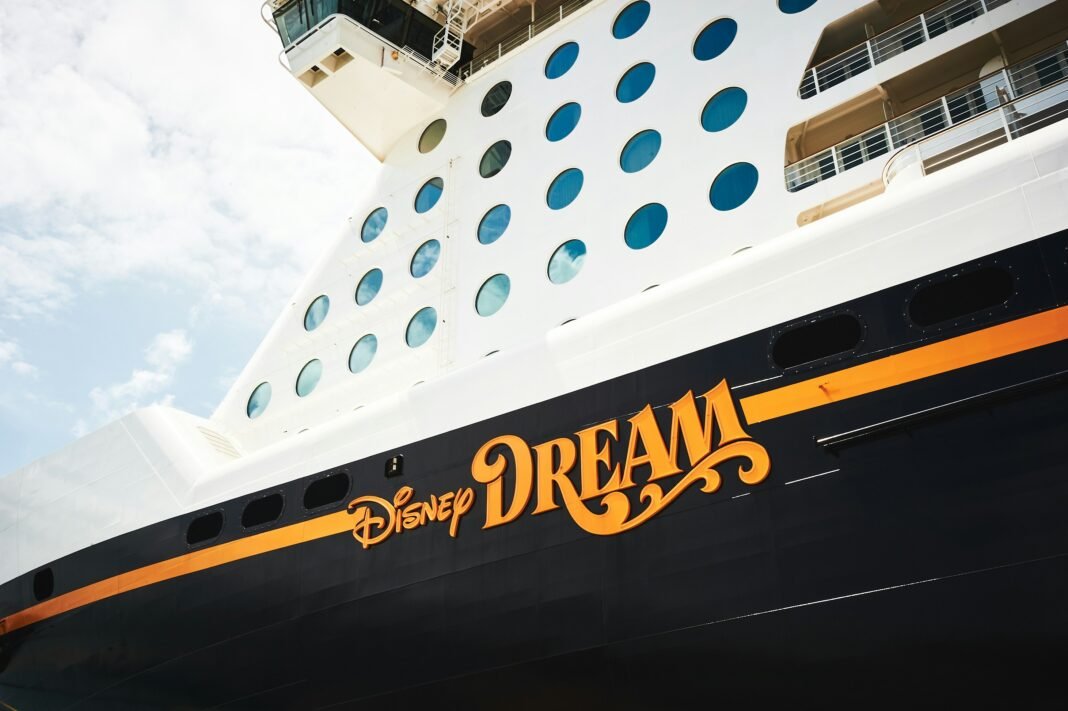
A five-year-old girl was rescued from the Atlantic after falling overboard from Deck 4 of the Disney Dream on June 29, 2025, while the ship was sailing between the Bahamas and Fort Lauderdale, Florida. Her father jumped into the water moments later, reached the child and kept her afloat until a rescue boat launched from the cruise ship recovered them both. Local authorities say the fall appears accidental and have refuted online speculation that the child was being held on the railing for a photo.
Incident Overview
The overboard occurred on the Deck 4 promenade, a public walking area that wraps around a portion of the vessel. According to information released through the Broward Sheriff’s Office and carried by local outlets, investigators determined the child had climbed onto a railing, lost her balance, and fell backward into open water. The ship was en route to Port Everglades at the time, returning from a Bahamas itinerary.
Initial social media rumors suggested the father might have placed the child on the railing. Authorities later corrected the record, stating the father had not been holding the child when she fell and that the sequence of events pointed to an accidental fall initiated by the child climbing up on her own. No criminal charges were indicated based on the information publicly released to date.
Rescue at Sea
After being alerted by the child’s mother, the 37-year-old father immediately entered the water. Shipboard emergency procedures were activated and a small rescue craft (tender) was launched from the Disney Dream to the location of the two people in the water. Local reporting places the time from the fall to retrieval at roughly 15–20 minutes; both were brought back aboard, where the child was assessed by medical staff and the father later transported to a hospital after the ship docked in Fort Lauderdale. His injuries were described as non-life-threatening.
Although outcomes in overboard incidents are often severe, several factors worked in favor of a successful rescue here: daylight conditions, immediate awareness of the fall, the father’s rapid response, quick activation of emergency procedures on the bridge, and prompt deployment of a tender capable of operating close to the waterline. Local outlets noted that shipboard alerts associated with a “man overboard” response were heard during the incident; that aligns with standard maritime practice to slow, maneuver, and deploy rescue assets as quickly as possible.
What Authorities Have Clarified
In updates released in the days after the incident, the Broward Sheriff’s Office emphasized two key points. First, the child’s fall was accidental and began when she climbed onto the railing herself; second, the father was not holding or positioning the child when it occurred. Those clarifications were intended to counter widespread, unverified claims that circulated on social platforms in the immediate aftermath. Authorities also confirmed the location and deck level associated with the fall and said the investigation remained open pending routine review of surveillance and operational records from the ship.
Timeline and Location
The fall occurred late Sunday morning while the Disney Dream was in international waters on the return leg to South Florida. Video taken by passengers showing the rescue boat approaching the father and daughter circulated widely, and local newsrooms confirmed with officials that Deck 4 was the area involved. The ship completed its voyage and docked at Port Everglades, where the father received additional medical care.
Safety Systems and Procedures
Cruise ships operating from U.S. ports are required to meet a range of safety measures, including minimum railing heights and the use of surveillance systems and other technology to enhance detection and response to emergencies. In practice, when a person is reported or detected overboard, bridge teams initiate a well-rehearsed sequence: announce the alert, reduce speed, turn to establish a search pattern, post visual lookouts, and deploy a fast-response tender when conditions permit. The Disney Dream’s execution of that sequence—rapid alerting, launch of a rescue craft, and retrieval within minutes—tracks with the procedural steps described by maritime authorities and routinely referenced in industry guidance.
While the specifics of the ship’s detection suite were not detailed publicly, local reporting and the ship’s own response indicate a timely recognition of the overboard and a coordinated deployment of resources. In general, cruise lines have invested in camera systems, thermal imaging, and bridge alarms designed to improve situational awareness during emergencies, particularly in high-traffic promenade areas where families gather. Those systems are most effective when combined with clear lines of communication from guests and crew who witness a fall.
Why This Rescue Stands Out
Overboard incidents are rare relative to the total number of cruise passengers each year, and survivals are rarer still given the variables at sea—distance from the ship, sea state, visibility, water temperature, and the time needed to launch a rescue. In this case, several elements aligned to produce a positive outcome. The fall was observed and reported immediately; the father reached the child quickly and maintained buoyancy; and a tender was able to locate and retrieve both within a short search window. Local authorities and multiple outlets underscored that sequence as the decisive difference between a near-tragedy and a successful rescue.
Investigation Status
As is standard after any overboard event, investigators are reviewing available video, interviewing witnesses and crew, and examining logs documenting the ship’s maneuvering and emergency responses. The purpose of such reviews is twofold: to confirm the chronology of events and to identify any opportunities to improve prevention or response. At present, information made public points to an accidental fall initiated by the child’s actions and a rapid rescue that adhered to established procedures. No indications of foul play have been reported.
Design and Passenger Awareness
Deck 4 promenades on large cruise ships balance open-air views with safety features such as protective barriers and railing height standards. Even with compliant design, however, elevated railings present obvious risks for small children if climbed. Industry guidance and embarkation-day briefings typically emphasize close supervision of children in open-deck areas, adherence to posted signage, and use of interior corridors or shaded seating areas when adults are unable to maintain arm’s-length proximity. While investigators did not cite a design violation on the Disney Dream, the incident has renewed attention on passenger awareness around railings and decorative apertures on promenade decks.
What We Know—Key Verified Elements
Date and location. The incident occurred on June 29, 2025, while the ship was sailing between the Bahamas and Fort Lauderdale and approaching its homeport of Port Everglades.
Mechanism of the fall. Investigators say the child climbed a Deck 4 railing and fell backward through a porthole-style opening.
Father’s response and rescue window. The father entered the water immediately and maintained the child at the surface until a tender launched by the ship reached them, with local outlets reporting a window on the order of 15–20 minutes from fall to recovery.
Medical outcome. The child was evaluated onboard and did not appear to suffer serious injury; the father was later transported to a Fort Lauderdale hospital for additional care after docking.
Rumors versus official findings. Authorities refuted claims that the father had placed the child on the railing and reiterated that available evidence indicates the child climbed up on her own before losing balance.
Why This Matters
The rescue on the Disney Dream underscores how a rapid, coordinated response can change the trajectory of an overboard incident. For cruise operators, the case will likely inform ongoing training and drills focusing on promenade-deck emergencies and tender deployment. For families traveling with young children, it is a reminder that compliance with posted guidance—and close, active supervision in open-air deck areas—remains essential even on vessels that meet or exceed regulatory standards. For investigators and regulators, the event provides further data on how detection, alerting and small-craft deployment timelines interact with environmental factors such as daylight and sea state to determine survivability.
The Bottom Line
Based on statements relayed by local authorities and corroborated by multiple reputable outlets, the facts are clear on core points: a five-year-old fell from the Deck 4 promenade of the Disney Dream after climbing onto a railing; her father immediately jumped in, reached her and kept her afloat; the ship activated emergency procedures, launched a tender and retrieved both within minutes; the child did not suffer serious injuries and the father received follow-up care after docking; and officials characterize the episode as an accident, not a criminal matter. As formal reviews conclude, the incident stands as a rare overboard survival driven by swift human action and an effective shipboard response.
Editor’s note: This report is based on information released or confirmed by local authorities and detailed by local and national outlets in the days following the incident. Where possible, we relied on primary local reporting and official clarifications to counter early misinformation and ensure accuracy.