

Introduction
On July 28, 2025, a sense of normalcy was shattered in Midtown Manhattan when a heavily armed gunman stormed 345 Park Avenue, one of the city’s premier office buildings. In less than ten minutes, four lives were lost, a fifth was gravely wounded, and the attacker was dead by suicide. The assailant, 27-year-old Shane Devon Tamura from Las Vegas, Nevada, had targeted the NFL’s headquarters but ended up on a different floor, unleashing terror in the offices of Rudin Management. The event is now being recognized as the deadliest mass shooting in New York City since the Wendy’s massacre in 2000.
Who Was Shane Devon Tamura?
Tamura, a former high school football player, had no criminal record but had a documented history of mental health struggles. Twice institutionalized for psychiatric evaluation in 2022 and 2024, he remained legally able to purchase firearms in his home state of Nevada. In the days leading up to the attack, he drove over 2,500 miles to New York City, reportedly stopping in multiple states and purchasing supplies, ammunition, and a duffel bag used to conceal his weapon.
A handwritten note found on his body blamed the NFL for his declining mental state, claiming he suffered from chronic traumatic encephalopathy (CTE) as a result of playing football. Though CTE can only be diagnosed post-mortem and Tamura had no formal diagnosis, the note pointed to deep-seated grievances and a fixation on the NFL.
Timeline of the Attack
6:28 p.m. EDT – Entry and Initial Misstep
Tamura entered 345 Park Avenue carrying an M4-style semiautomatic rifle inside a red duffel bag. Due to the building’s divided elevator system, he mistakenly arrived on the 33rd floor—home to Rudin Management—rather than his intended destination: the NFL’s offices on the 17th floor.
6:30 p.m. – Shooting Begins
Without warning, Tamura opened fire in Rudin Management’s offices. The attack unfolded in seconds, and by the time police were alerted, four individuals had been fatally shot:
- Didarul Islam, 36, an off-duty NYPD officer working security
- Wesley LePatner, 54, a senior executive at Blackstone
- Aland Etienne, 41, a security guard
- Julia Hyman, 29, an employee of Rudin Management
One NFL employee was also seriously wounded but survived after being rushed to Bellevue Hospital.
6:35 p.m. – Suicide and Police Response
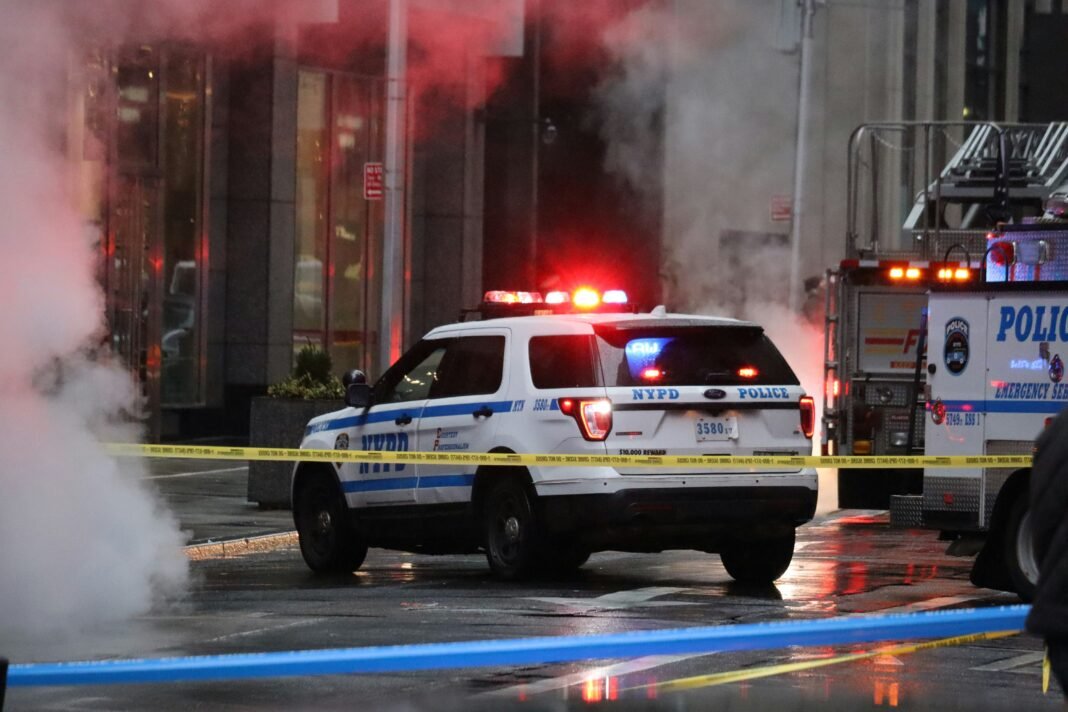
Before police could reach the floor, Tamura turned the gun on himself. NYPD and emergency response units flooded the scene within minutes. The building was locked down, swept floor-by-floor, and secured by counterterrorism teams.
The Victims: Lives Cut Short
Didarul Islam
A decorated 12-year veteran of the NYPD and a father of two, Islam was posthumously promoted to Detective First Grade. His heroism and dedication were honored at a vigil and through a GoFundMe that raised over $200,000.
Wesley LePatner
A senior executive at Blackstone, LePatner was well-known in the real estate investment world. Colleagues described him as a mentor and visionary.
Aland Etienne
A security guard who attempted to stop Tamura during the attack. He is remembered for his bravery and kindness.
Julia Hyman
A young professional at Rudin Management, Hyman was praised for her warmth, intelligence, and rising potential.
Surviving Victim
An unnamed NFL employee was critically injured but survived. Their current condition remains closely monitored.
A City Responds: Grief and Solidarity
The following evening, a vigil was held at Bryant Park. City officials, business leaders, and everyday New Yorkers came together to mourn. Mayor Eric Adams praised Officer Islam’s bravery and condemned the attack as a “despicable act of violence.” Governor Kathy Hochul echoed calls for gun reform and mental health investment.
Investigating the Motive and Method
The NYPD, FBI, and ATF are conducting a joint investigation. A cache of additional weapons and hundreds of rounds of ammunition were found in Tamura’s vehicle. Surveillance video showed him purchasing his duffel bag and other supplies days earlier in New Jersey.
Authorities are examining his online history, including posts expressing frustration with the NFL and mental healthcare system. His firearm was purchased legally in Nevada, which does not flag psychiatric holds unless they result in court orders—highlighting a key gap in national gun policy.
The Bigger Picture: Gun Laws, Mental Health, and Security
Mental Health and CTE
Tamura’s claim of suffering from CTE—though unproven—has reopened discussions about brain injuries in football and the NFL’s responsibility. Critics argue the league has not done enough to support long-term health monitoring, even among amateur athletes.
Gun Policy and Interstate Loopholes
Despite New York’s stringent gun laws, Tamura was able to carry a weapon across state lines undetected. Officials are calling for stronger national red flag laws and improved information-sharing between states.
Corporate Security
Many companies headquartered in high-profile buildings like 345 Park Avenue are now reassessing security protocols. Questions are being raised about the effectiveness of bag checks, surveillance, and emergency planning.
Conclusion: A City Changed
The attack at 345 Park Avenue is more than a tragedy—it’s a call to action. It has reignited urgent discussions about mental health, gun access, and the responsibilities of corporations in ensuring workplace safety. As the city mourns, it also reflects and prepares for a future where such violence must be prevented. The bravery of those who died, and the resilience of New Yorkers, continue to shine in the darkness left behind by one man’s descent into violence.