

Two veteran firefighters were killed and a third was critically injured after a gunman ambushed first responders who had been dispatched to a small brush fire on Canfield Mountain in Coeur d’Alene, Idaho, on June 29, 2025. Authorities say the blaze was set intentionally to lure crews into an attack zone. The suspect, identified as 20-year-old Wess Roley, was later found dead on the mountain following an hours-long search by local, state, and federal officers. The wildfire—named the Nettleton Gulch Fire—was fully contained by early July after burning a few dozen acres in steep, timbered terrain.
What investigators Say Happened
Dispatchers received a report of a brush fire on Canfield Mountain early Sunday afternoon on June 29. Crews from multiple agencies responded to Nettleton Gulch on the mountain’s west slope, an area of mixed timber and recreational trails near residential neighborhoods on the edge of Coeur d’Alene. Within a short time of arrival, firefighters came under sustained gunfire and were forced to take cover. The initial fire-suppression effort was paused while law enforcement attempted to locate the shooter and secure the scene. Officials described the attack as premeditated and said preliminary evidence indicates the fire was set to draw first responders to the location.
Preliminary reports suggested crews may have asked a man near the scene to move a vehicle obstructing access, after which shots were fired, though this is under review. Investigators indicated the gunfire likely came from an elevated position, possibly using terrain or tree cover, though this awaits forensic confirmation. Those details remain part of the ongoing reconstruction of events using witness accounts, radio traffic, and video.
Victims and Agencies involved
The fallen firefighters were identified as Battalion Chief John Morrison, 52, of the Coeur d’Alene Fire Department, and Battalion Chief Frank Harwood, 42, of Kootenai County Fire & Rescue. Engineer David (Dave) Tysdal, 47, of Coeur d’Alene Fire, survived after emergency surgery and subsequent critical care; his condition later stabilized, and officials reported continued recovery following multiple interventions. Regional and national firefighter organizations acknowledged the line-of-duty deaths, and local departments coordinated to cover service needs while families and colleagues grieved.
Multiple agencies responded to both the shooting and the wildfire. The Kootenai County Sheriff’s Office led the criminal investigation and coordinated the tactical response, supported by Coeur d’Alene Police, Idaho State Police, and neighboring jurisdictions. Federal partners provided personnel and technical assets. The Idaho Department of Lands (IDL) and cooperating fire agencies managed the wildfire once safety conditions allowed.
The Suspect and the Search
Officials identified the suspect as Wess Roley, age 20. He was located deceased on Canfield Mountain later the same day, with a firearm found nearby. Early reporting varied on the weapon type; some accounts referenced a shotgun recovered near the body while other reports described a rifle used in the attack. Investigators have not released a final ballistic summary; early differences in public descriptions are common in complex, active incidents and are reconciled as evidence is processed.
The search for the suspect drew a large, multi-agency response. Regional outlets and national reporting noted that roughly several hundred law enforcement personnel, including specialized teams and aviation support, converged on the mountain and adjoining neighborhoods. A temporary shelter-in-place advisory was issued for parts of eastern Coeur d’Alene during the active phase of the operation and was lifted once the scene was secured.
How the Fire and Crime Scenes were Managed
Because crews were receiving fire from an unknown position, firefighters initially disengaged from direct suppression until the area could be made safe. That pause allowed the wildfire to expand through steep, timbered slopes and dry understory in afternoon conditions. By evening, the fire footprint had grown to the tens of acres range, consistent with initial mapping conducted under constraints posed by the investigation and terrain. Once the mountain was declared safe, IDL reinforced the incident with additional hand crews, engines, and support resources to work through the night.
By July 4, incident managers reported 100% containment, and repair work began to mitigate fireline impacts and address hazards such as snags and rolling material. The U.S. Forest Service, Idaho Panhandle National Forests lifted the associated area closure on July 8 after coordination with state partners. Final size estimates placed the footprint at approximately 23–26 acres, reflecting refinement as mapping improved and suppression lines were tied in.
What Officials have Disclosed About Method and Motive
Investigators stated that early evidence suggested the fire was intentionally set using a simple ignition source, with one briefing noting recovery of a flint fire starter linked to the scene. Authorities believe the ignition and the shooter’s position were part of a plan to draw first responders into a vulnerable location. A definitive motive has not been established publicly. Law enforcement indicated that the investigation includes analysis of the suspect’s communications, devices, and vehicle, along with interviews of acquaintances and family members to understand potential drivers and planning.
Subsequent reporting added context about the suspect’s background. Outlets cited officials who said Roley had previously expressed an interest in firefighting and had explored service pathways, and that parts of his personal life showed recent instability. Those accounts offer potential context but do not replace a formal determination of motive, which can take weeks as forensic and digital evidence is analyzed.
Timeline of the Response
Based on combined official and media timelines, the first 911 call reporting a small brush fire in Nettleton Gulch was logged early in the afternoon on June 29. Fire units from Coeur d’Alene, Kootenai County, and the Northern Lakes Fire District arrived shortly thereafter. As shots were reported over the radio, fire suppression was halted and a law-enforcement perimeter was established around the mountain. Specialized teams deployed, and investigators used technology and field searches to narrow the suspect’s location. By evening, the suspect was found deceased on the mountain, allowing fire crews to re-engage suppression operations and begin constructing and strengthening control lines before nightfall.
Community Impact and Official Actions
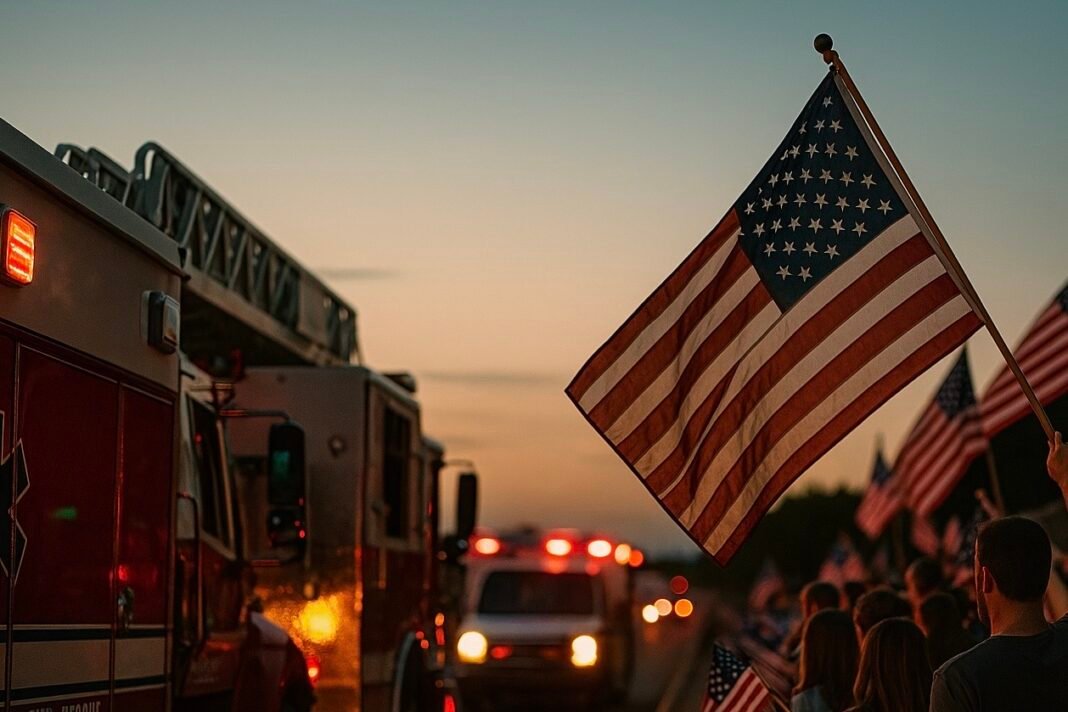
The attack stunned the community and the fire service across the region. Local hospitals coordinated trauma care, regional agencies initiated honor protocols, and municipal leaders organized logistics for memorial observances. The International Association of Fire Fighters and partner organizations provided peer-support resources for responders and families. The Governor of Idaho, Brad Little, ordered U.S. and state flags lowered to half-staff to honor the fallen and directed attention to the immediate needs of the affected departments.
Processions and coordinated transport were organized to transfer the fallen firefighters with honors, a standard line-of-duty procedure managed in cooperation with medical examiners and law enforcement. Departments across North Idaho and the Inland Northwest provided station coverage so local agencies could participate in ceremonies and begin the longer recovery period that follows a mass-casualty incident involving first responders.
Safety Considerations for First Responders
The incident highlights a growing concern within the fire and EMS community: the risk of targeted violence during routine responses. First-due companies typically arrive before law enforcement on reports of small roadside or wildland fires, medical calls, or alarms. The Canfield Mountain ambush illustrates how a seemingly minor ignition can be used to stage an attack, creating complex, multi-hazard scenes that mix fire behavior, terrain, and active criminal threats.
Many agencies have adopted heightened awareness and coordination protocols for suspicious incidents, including staging away from scenes with atypical access issues, requesting law-enforcement escorts when indicators are present, and leveraging aerial overwatch where available. After the ambush, local officials in Kootenai County stated that police would accompany fire crews on calls in the near term to mitigate risk while agencies assess procedures. The balance between rapid life safety action—core to the firefighting mission—and responder security will likely be a central topic in subsequent after-action reviews.
Wildfire Operations Under Law-Enforcement Constraints
In wildland-urban interface areas like the foothills of Coeur d’Alene, rapid initial attack is the most effective way to keep small fires small. The ambush prevented the usual downhill and flanking tactics during the crucial first hour. With suppression paused, the Nettleton Gulch Fire advanced through receptive fuels on steep ground before the perimeter could be closed. Once law-enforcement secured the area, IDL and cooperating crews built line, improved it with water support where possible, and held the fire through the following operational periods until containment was reached. That sequence, while atypical due to the criminal overlay, tracks with how agencies must prioritize responder safety before re-committing resources to suppression.
What Remains Under Investigation
Key open questions include the suspect’s detailed planning, acquisition and use of weapons, exact firing positions, and whether any additional ignition points were prepared. Evidence teams collected ballistic material, documented the fire’s point of origin, and secured the suspect’s vehicle and personal effects for analysis. Agencies have also requested community submissions of video taken near the mountain on the afternoon of June 29 to refine timelines and vantage points. The broad multijurisdictional participation means aspects of the case may route through county, state, and federal processes before a consolidated narrative is published.
Containment Milestones and Area Reopening
With containment declared at 100 percent on July 4 and suppression repair initiated, land managers assessed slope stability, snag hazards, and trail damage on the mountain. The Idaho Panhandle National Forests lifted an area closure on July 8, allowing the public to return to popular trail networks while reminding visitors to heed signs and avoid disturbed ground. Those milestones marked the transition from emergency response to recovery and memorial activities in Coeur d’Alene and the broader Kootenai County region.
Context About the Suspect’s Background
Follow-up reporting described a young adult whose recent history included unfulfilled attempts to enter uniformed service and personal challenges. Outlets summarizing information from investigators and public records noted that Roley had been turned away from certain opportunities after not completing required steps and that his family environment included documented strain. While those details can inform understanding, authorities have not assigned a single definitive motive, and the investigation has emphasized evidence-based conclusions over speculation.
Aftermath and Lasting Impact
The Canfield Mountain ambush joins a small but consequential list of U.S. incidents in which first responders were targeted while performing core public-safety duties. The setting—a wildland-urban interface slope above established neighborhoods—underscores how quickly routine deployments can evolve when criminal threats are present. It also demonstrates how intertwined fire service and law enforcement operations become the moment a response turns hostile. The immediate restraint shown by firefighters under fire, the rapid mobilization of large-scale law-enforcement resources, and the subsequent handoff back to wildfire managers all shaped the outcome: a contained fire, a suspect located, and a community able to begin mourning and recovery.
For the families of Battalion Chiefs John Morrison and Frank Harwood, and for Engineer Dave Tysdal as he continues to recover, the incident will have lasting impact. For the region’s first-responder community, it will inform training, staging practices, and interagency coordination for years to come. For residents, it is a reminder that even small ignitions can pose complex risks when criminal activity is involved, and that the safety of responders depends on both protocols and situational awareness.